Children of the Wood
One was Una
One was Una
Couldn't load pickup availability
Local Author
Part of the Witch of the Wood Library
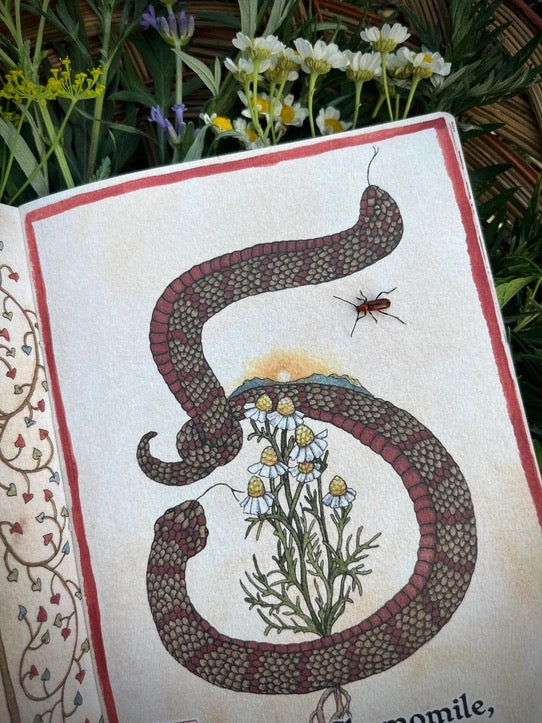
One was Una: A Child’s Book of Wortcunning. It was printed by a lovely employee-owned printing press on lightly textured 80lb art paper. It is 28 pages and measures 4.75 x 6.75 inches. It comes signed and bound by the author using red linen.
From the Author: "The small scale of most of my work is inspired by my love for tiny worlds. What is Wortcunning? Well I do indeed address that on the first page of my book, but essentially it is an Old English word that means 'to KNOW the herbs.' Wortcunning isn’t just 'herbalism,' as we know it today. It’s knowing plants in a medicinal, magical, relational, ancestral and intuitive sense, rather than purely memorizing the medicinal qualities of each plant. Today we would probably call it 'Folk Herbalism.' In keeping with the spirit and time of 'Wortcunning,' I based this book on the very very old Anglo Saxon 'Nine Herbs Charm.' The 'Nine Herbs Charm' invokes 9 plants held sacred by the Anglo Saxons around 1000 AD (and likely for thousands of years prior) and asks for their help. It addresses them as mighty heroes rather than commodities. To me it is really cool that we have this rare written record of pre-christian Anglo-Saxon animist practices and beliefs. One was Una, was written and designed to appeal to curious readers of all ages. It can be read quickly with very young children as a fun counting book that introduces them to nine magical plants (and 10 is the healer who sang over them). It can also be flipped back through by older kids to view the lefthand pages for more detailed but age-appropriate info on the nine plants and how they were known in medieval England. Finally I committed the last 3 pages to curious nap-trapped parents who want to read the actual 9 herbs charm, and a bit about it. (On the copyright page I included a short reference list for continued grownup reading)."
"The hand-drawn art of the book was inspired by medieval herbals and 'marginalia.' In my research I learned that medieval herbals could be dangerous in the most diabolically whimsical way. A scorpion, spider, or snake, could indicate that an herb was effective against poison, or that it WAS poison. Uh oh. So I made the Adder snake (often referenced in old herbals) into all of my number symbols, and also included a scorpion as a little homage to the old texts that inspired me. Marginalia is the delightful art you see on old medieval manuscripts scribbled around the text’s edges."
Share